
France Music for Food
Cook, Wine and Dine to a Vintage of the Finest French Chansons
Whether cooking in the kitchen, dinner for two or a meal with friends, enjoy the perfect accompaniment. Featuring classic tracks by some of the greatest French artists, including Edith Piaf, Charles Trenet and Lucienne Boyer.
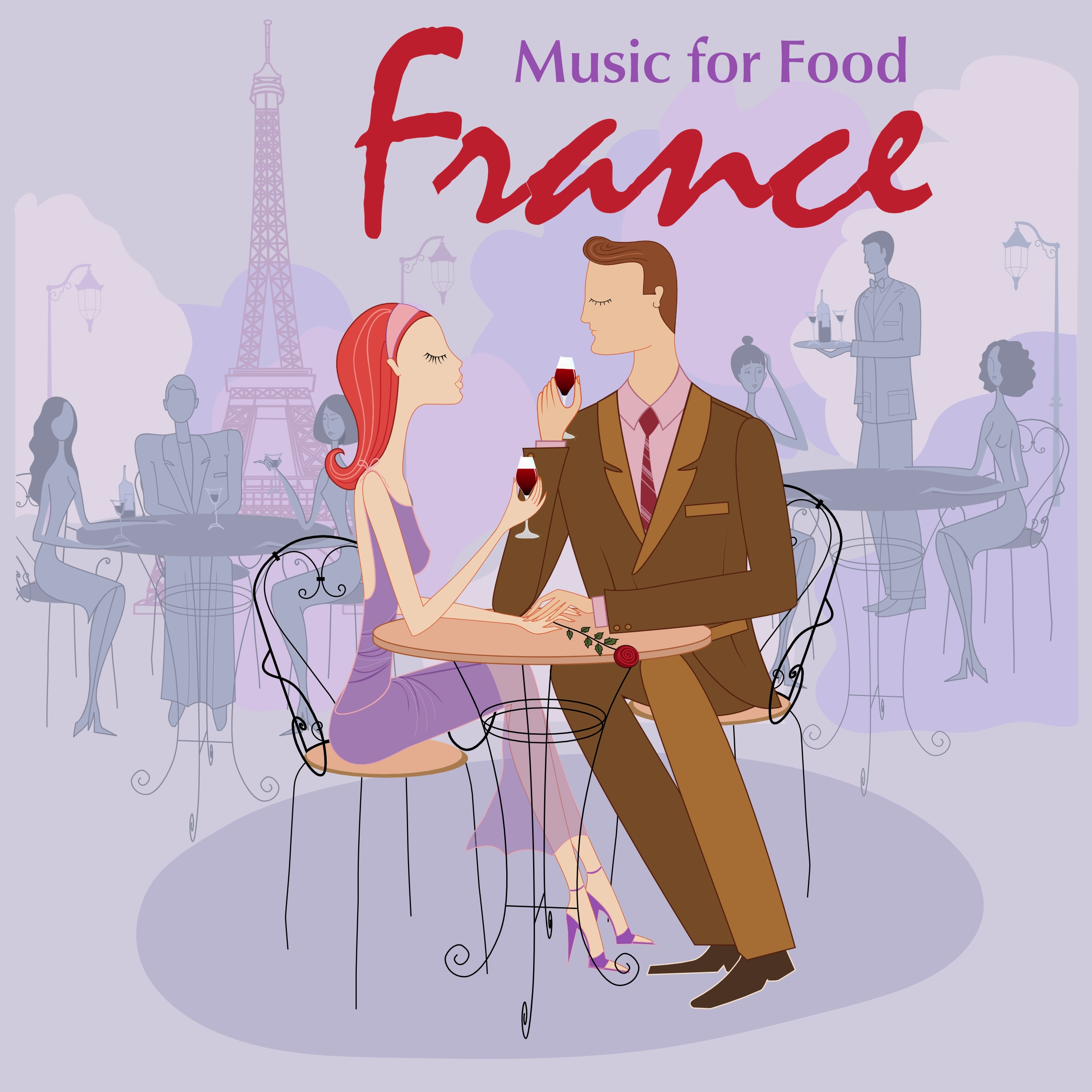
If you like French food, you’ll love France Music for Food, the first album in the series. A collection of the finest French chansons featuring classic tracks by some of the greatest French artists, including Edith Piaf, Charles Trenet and Lucienne Boyer.
[1] Gus Viseur et son orchestre – Flambée montalbanaise
[2] Edith Piaf avec Yvon Jeanclaude – C’était une histoire d’amour
[3] Charles Trenet – La Mer
[4] Lucienne Boyer – Parlez-moi d’amour
[5] Lucienne Delyle – Nuages
[6] Edith Piaf – J’m’en fous pas mal
[7] Mistinguett et Léo Kok – Je cherche un millionnaire
[8] Georges Ulmer – Pigalle
[9] Maurice Chevalier – On est comme on est
[10] Lucienne Boyer – Embrasse-moi
[11] Lucienne Boyer – Mon cœur est un violon
[12] Lucienne Boyer – C’est mon quartier
[13] Lucienne Delyle – Embrasse-moi (Chéri)
[14] Lucienne Delyle – Des mensonges
[15] Jean Lumière – Un amour comme le notre
[16] Jean Sablon – Vous qui passez sans me voir
[17] Charles Trenet – Que reste-t-il de nos amours
[18] Charles Trenet – Près de toi mon amour
[19] Charles Trenet – Ménilmontant
[20] Maurice Chevalier – Paris je t’aime d’amour
Tracks
[1] Gus Viseur et son orchestre – Flambée montalbanaise
(Viseur) (1941)
Close your eyes and imagine you’re in Paris, sitting at a bustling café, a Paris bistro, the sound of cups and saucers, the smell of coffee and croissants, or at the Bal du Moulin de la Galette in Renoir’s painting. This is real accordion music: the Bal Musette is part of Parisian culture, and was the music of the ordinary people of Paris. Gus Viseur was one of the greats of the Musette, and also accompanied Edith Piaf in L’Accordéoniste.
[2] Edith Piaf avec Yvon Jeanclaude – C’était une histoire d’amour
(Orchestra Normand) (Contet/Jean Jal) (1942)
The greatest chanteuse of all, Edith gave body and soul to her songs and to life. She captivated audiences everywhere, but her life like her songs was one of success and tragedy. Edith’s greatest love, the world boxing champion Marcel Cerdan, was killed in a plane crash flying to join her, but Edith sang on that night in New York to a packed house. According to Edith, there was only one kind of beautiful song, une chanson d’amour.
[3] Charles Trenet – La Mer
(Orchestra directed by Lasry) (Trenet) (1946)
Drift off to France on a wave of nostalgia with La Mer. You can sense the waves lapping your toes, and almost taste the fruits de mer. Lazy, hazy, carefree summer holidays on the Côte d’Azur, or a breezy Brittany beach, splashes of pastel colour, the sparkle of light on water, eyes squinting at the sun, and flashes of bygone days like the sound of waves in a sea shell.
[4] Lucienne Boyer – Parlez-moi d’amour
(Orchestra directed by Codolban) (Lenoir) (1930)
Lucienne Boyer sings a beautiful chanson d’amour with a sensual whisper: a gramophone, a dreamy picnic à la campagne, or a secret rendezvous. With this song, Lucienne Boyer won the Grand Prix du Disque and worldwide success, and one can’t help being enchanté on hearing it for the first time.
[5] Lucienne Delyle – Nuages
(Orchestra directed by Metehen) (Reinhardt/Larue) (1942)
Dreamy, wispy, and wistful, the music to Clouds was written by Django Reinhardt, the famous jazz guitarist who also worked with the French jazz musician Stéphane Grappelli.
[6] Edith Piaf – J’m’en fous pas mal
(Orchestra directed by Luypaerts) (Emer) (1946)
Her name may mean ‘sparrow’ in French, but Piaf perfectly conveys the impact of Edith’s voice. Edith Piaf was brought up on the streets, abandoned by her mother, and lost her only child. Years later, remembering this, she gave a million francs to a mother in despair. Edith became dependent on morphine to ease her pain after a car accident and personal tragedy. She died aged 48, leaving a legacy of unforgettable French soul music.
[7] Mistinguett et Léo Kok – Je cherche un millionnaire
(Orchestra directed by Pagnoul) (Brown/Cab/de Lima) (1938)
The French singer and actress with the famous beautiful legs, Mistinguett was one of the stars of the music halls of Paris and abroad, appearing at the Moulin Rouge and the Folies-Bergère. Chic, cheeky, and with charme, Mistinguett was certainly worth a million francs.
[8] Georges Ulmer – Pigalle
(Orchestra directed by Coste) (Ulmer/Koger) (1946)
Risqué nightspots, the Moulin Rouge and red lights.
[9] Maurice Chevalier – On est comme on est
(Orchestra directed by Cariven) (Mireille/Willemetz) (1938)
A cabaret number from the Casino de Paris from the handsome Frenchman, Maurice Chevalier bon viveur, charmeur and musical raconteur extraordinaire.
[10] Lucienne Boyer – Embrasse-moi
(G. Tabet/A. Tabet/Pils) (1939)
Lucienne Boyer appeared in films, sang in Paris, on Broadway, and stages all over the World. And always in a midnight blue velvet dress.
[11] Lucienne Boyer – Mon cœur est un violon
(Orchestra directed by Pourcel) (Richepin/Laparcerie) (1945)
[12] Lucienne Boyer – C’est mon quartier
(Orchestra directed by Legrand) (Yvain/Poterat) (1941)
Lucienne is accompanied in Quartier on accordéon, listen for the bellows at the start of the song.
[13] Lucienne Delyle – Embrasse-moi (Chéri)
(Orchestra directed by Barelli) (Barelli/Larue) (1945)
Fall into Lucienne Delyle’s embrace as she sings a lullaby of love of pure romance.
[14] Lucienne Delyle – Des mensonges
(Orchestra directed by Coste) (Sauvat/Kreuder) (1943)
A beautiful, seductive, sensual voice as rich as café noir and as blue as Gauloise smoke.
[15] Jean Lumière – Un amour comme le notre
(Orchestra directed by Cadou) (Borel-Clerc/Farel) (1934)
[16] Jean Sablon – Vous qui passez sans me voir
(Orchestra directed by Wal-Berg) (Trenet/Hess/Misraki) (1936)
Jean Sablon sang with Mistinguett at the Casino de Paris. He was the first French singer to use a microphone on stage, and was accused of having no voice, but the warm and intimate style won the Grand Prix du Disque for this chanteur de charme.
[17] Charles Trenet – Que reste-t-il de nos amours
(Orchestra directed by Chauliac) (Trenet) (1943)
[18] Charles Trenet – Près de toi mon amour
(Accompanied by Wal-Berg et son Orchestra) (Trenet/Luypaerts) (1940)
Sit back and enjoy the douceur de vivre, Charles Trenet’s voice melts like ice-cream on a summer’s day, and who wants pudding when you can have dessert?
[19] Charles Trenet – Ménilmontant
(Orchestra directed by Wal-Berg) (Trenet) (1939)
Edith Piaf and Maurice Chevalier were both born in Ménilmontant, an area of Paris like Montmartre or Montparnasse, but in this song by Charles Trenet you could be au bord de la mer running along the beach splashing in the water with the delight of an Impressionist painting or in a fleeting moment to remember caught on camera by Henri Cartier-Bresson.
[20] Maurice Chevalier – Paris je t’aime d’amour
(Grey/Schertzinger/Battaille-Henri) (1931)